UGG Boot Cleaning and Leather Boot Care in Fall: What to Do Before Winter Sets In
UGG boot cleaning and leather boot care become urgent in fall on Long Island, when early salt, mud, and moisture begin setting into materials that absorb damage faster than most people expect. The window between the first cold snap and the first real winter storm is short, and what you do with your boots in that window determines how they come out the other side of the season.
Why Fall Is the Highest-Risk Season for Your Boots
The Problem With Waiting Until Damage Is Visible
Most people pull out their UGGs and leather boots when the temperature drops and put them away when it warms up. What happens in between rarely gets attention until something looks wrong. By the time a salt stain is visible on suede or a leather boot shows cracking along the toe box, the damage has already done its work beneath the surface.
Salt residue is the clearest example. Road salt and sidewalk treatments used during early November weather do not sit on the surface of suede or leather. They wick into the material and begin breaking down the fibers and natural oils from the inside. The tide line you see on the outside of a boot after a wet walk is a surface indicator of penetration that has already happened. Attempting to scrub or blot it away without addressing what is underneath typically spreads the stain rather than lifting it.
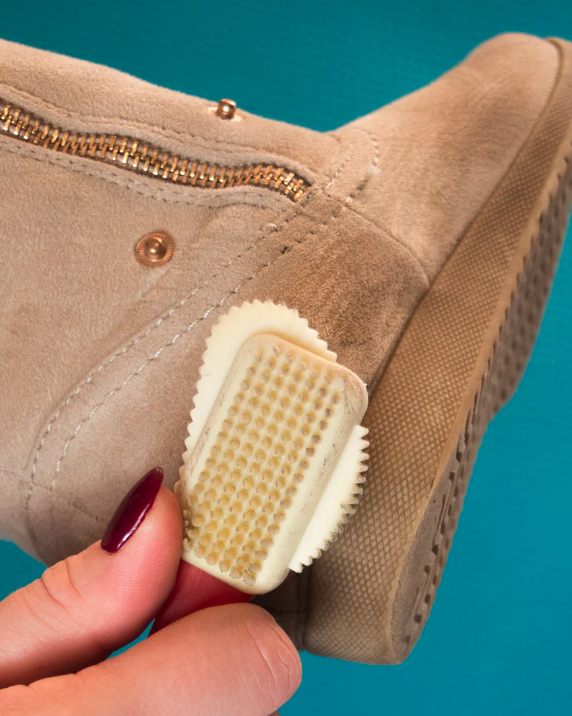
Mud presents a similar problem. Dried mud on suede is easier to remove than wet mud, but mud that has been worn through and ground into the nap over multiple wears becomes embedded in a way that surface brushing cannot address. Moisture from rain and puddles compounds both issues by opening the fiber structure of suede and leather, allowing contaminants to penetrate more deeply with each exposure.
Why Fall Cleaning Matters More Than Spring
Cleaning boots at the end of the season before storage is standard advice, but cleaning before the season is more important. Boots coming out of storage often carry invisible oxidizing residue from the prior year. Wearing them without cleaning first means heat from your foot reactivates that residue, setting stains and accelerating material breakdown before you have noticed anything is wrong.
Fall cleaning also gives treated leather and suede the protection they need before sustained exposure to salt and wet conditions begins. Conditioned leather maintains suppleness through repeated freeze-thaw cycles. Untreated leather dries out and cracks, often along stress points at the toe box and ankle. The difference between a boot that looks good after three winters and one that shows significant wear after one is often how consistently it was conditioned and cleaned before each season.
Professional Care vs. Home Cleaning Kits
What Home Products Can and Cannot Do
Suede brushes, eraser blocks, and protective sprays sold for home use serve a real purpose: light surface maintenance between professional cleanings. A suede brush can lift surface dust and raise flattened nap. An eraser block addresses minor scuffs on smooth suede. A water repellent spray provides some resistance to light moisture.
None of these address what accumulates with actual wear. Deep-set oil from handling, embedded salt crystals, matted nap from prolonged pressure, and staining from moisture contact all require professional cleaning methods. Applying a waterproof spray over a salt-stained boot seals the residue in rather than removing it. Brushing a heavily soiled suede surface can grind contaminants deeper rather than lifting them.
What Professional Boot Cleaning Addresses
Professional UGG and shearling cleaning uses dry cleaning techniques designed for napped leathers and shearling linings that cannot safely be saturated with water or standard cleaning agents. The process lifts soil and salt from within the fiber structure rather than from the surface only, restores the nap to its original texture, and addresses the shearling lining without causing matting or shrinkage.
For leather boots, professional leather and suede cleaning goes beyond surface conditioning to address the material itself: removing embedded soil and salt, re-opening the pores of the leather so that conditioning product can penetrate, and then applying conditioner appropriate for the specific hide. The result is supple, protected leather that will flex without cracking through the cold months ahead rather than drying out and splitting at stress points.
Do This, Not That: Boot Storage and Between-Wear Care
Storage
Do: Use cedar boot trees or rolled towels inside leather boots when they are not being worn. Boot trees maintain the shape of the shaft and toe box, absorb moisture, and prevent the creasing and collapse that causes permanent shape loss over a season. Store boots upright in a breathable cotton bag or on an open shelf, not in plastic bags or airtight containers that trap moisture and allow mildew to develop.
Not that: Do not store leather or UGG boots in the original cardboard box. Cardboard absorbs and holds moisture, creating the conditions for mold growth along the boot surface and lining. Do not stack boots or fold them at the shaft for storage. A single season of folded storage can create permanent crease marks in the leather that cannot be conditioned out.
Between Wears
Do: Allow boots to dry completely before storing them after each wear. Remove visible mud when dry by tapping the boot soles together and brushing gently. For UGGs and suede styles, keep a suede brush handy to raise nap flattened during the day. Condition leather boots two to three times per season, and more frequently with heavy use in wet conditions.
Not that: Do not apply heat to dry wet leather or UGG boots. Radiators, heat vents, and hair dryers accelerate moisture loss in a way that causes leather to dry out and crack and shearling to stiffen and mat. Do not use household cleaning products, dish soap, or undiluted vinegar on suede or nubuck. These damage the fiber structure and alter the finish in ways that cannot be corrected without professional treatment.
Conditioning Frequency
Leather boots benefit from conditioning before first wear each fall, after any heavy exposure to salt or wet conditions, and at the end of the season before storage. Suede and nubuck do not require oil-based conditioners the same way smooth leather does, but they benefit from a dry protectant spray applied before the season and reapplied every four to six weeks during active wear.
Frequently Asked Questions
Can UGG boots be cleaned professionally without damaging the shearling lining?
Yes. Professional cleaning for UGG-style boots uses dry methods appropriate for both the suede exterior and the shearling interior. Water-based cleaning can mat and shrink the lining, which is why professional dry cleaning is the recommended method. The lining is cleaned and revived as part of the process without saturating the materials.
How do I get salt stains out of suede boots?
Salt stains on suede need professional treatment for reliable removal. Home remedies such as white vinegar or rubbing with a damp cloth can spread the salt residue and create a larger tide line. A professional cleaning process addresses the stain from within the fiber rather than at the surface, which is the only way to remove it without leaving a shadow.
How often should leather boots be conditioned?
Two to three times per season is the standard recommendation for regularly worn leather boots in a climate with winter salt and moisture exposure. Boots worn in heavy conditions may benefit from more frequent conditioning. The indicator is the leather surface itself: when it begins to look dry or loses some of its sheen, conditioning is overdue.
Is boot cleaning available through pickup and delivery?
Boot cleaning and leather care are available through our specialty cleaning services. Call to confirm your area is within the current pickup route. For a full overview of care options, visit our services page.