Professional Carpet & Area Rug Cleaning in West Islip, NY — Persian, Oriental, Wool & All Rug Types
From everyday synthetic rugs to irreplaceable Persian and Oriental heirlooms, Oak Neck Cleaners treats every rug with the individual care its fibers and construction require. Serving Bay Shore, Babylon, and all of Suffolk County's South Shore.
Area rugs are among the most valuable and most difficult-to-clean textiles in any home. A hand-knotted Persian rug, a vintage Oriental, a custom wool area rug, these are significant investments that require cleaning methods matched to their specific fibers, dyes, and construction. At Oak Neck Cleaners in West Islip, NY, we clean area rugs of all types and sizes, from everyday synthetic and machine-made rugs to the most delicate handmade and antique pieces. Each rug is assessed individually before cleaning begins, with the method selected based on the fiber content, dye stability, construction type, and condition of the specific piece.
Our area rug cleaning service works on a drop-off and pickup model. Drop your rug off at 945 Montauk Highway in West Islip, or schedule a free pickup and we'll collect it from your home. After cleaning, finishing, and inspection, we return your rug clean, refreshed, and ready to be placed back in your space. We serve customers throughout West Islip, Bay Shore, Babylon, and surrounding Suffolk County communities. For large or heavy rugs that are difficult to transport, our free pickup service is especially convenient, call 631-422-4339 or schedule online.
Area Rug Styles & Origins We Clean
We clean all area rug styles, origins, and constructions. Here's a detailed breakdown of the rug types we most commonly care for:
Rug Type |
Cleaning Considerations |
|
Persian Rugs |
Hand-knotted Persian rugs use natural wool pile and vegetable or synthetic dyes that require dye-stability testing before wet cleaning. Construction and pile depth vary significantly between regional styles (Tabriz, Isfahan, Kashan, etc.), and each is assessed individually. |
|
Oriental Rugs |
Encompasses a broad category of hand-knotted rugs from Turkey, India, Pakistan, China, and Afghanistan. Construction quality, fiber type, and dye fastness vary widely; individual assessment determines the appropriate method. |
|
Turkish Rugs |
Turkish rugs (Anatolian) often use a wool pile on cotton or wool foundations. Kilim flat-weaves and pile rugs are handled differently; kilims require especially gentle treatment to prevent warp distortion. |
|
Indian & Pakistani Rugs |
Machine-made and hand-knotted versions are common. Wool, silk, and silk-blend Indian rugs were assessed for dye stability before cleaning. High-pile designs are handled with care to prevent pile distortion during cleaning. |
|
Wool Area Rugs |
Wool requires controlled temperature washing; hot water causes irreversible felting and shrinkage. Wool-safe cleaning agents and cool-temperature processes preserve fiber integrity and natural lanolin. |
|
Silk & Silk-Blend Rugs |
Silk is extremely delicate; water and many cleaning agents cause irreversible dye bleeding, texture damage, and luster loss. Silk rugs are among our most specialist treatments; assessed individually with a conservative approach. |
|
Antique & Vintage Rugs |
Age-fragile fibers, unstable dyes, and delicate pile condition require highly conservative cleaning. Every antique rug is assessed individually. We advise on realistic outcomes and only proceed with your informed agreement. |
|
Flat-Weave & Kilim Rugs |
Flat-weave construction without pile, warp, and weft structure must be preserved during cleaning. Different technique from pile rugs; pressed flat and dried under tension to prevent distortion. |
|
Shag & High-Pile Rugs |
Deep pile traps dirt, pet hair, and allergens deeply; cleaning must penetrate to the foundation. Drying shag rugs thoroughly is critical; wet pile against the backing can cause mildew and odor. |
|
Synthetic Area Rugs (Nylon/Polypropylene) |
Durable and generally colorfast. Cleaned with thorough soil extraction and stain treatment. Less delicate than natural fiber rugs, but still benefit significantly from professional extraction over home cleaning. |
|
Braided & Woven Rugs |
Cotton and wool braided rugs cleaned with attention to the construction integrity at braid junctions, which are vulnerable to unraveling if agitated incorrectly. |
|
Custom & Designer Rugs |
Rugs purchased from designers or custom-fabricated assessed individually based on fiber content, backing material, and any finishing treatments applied by the manufacturer. |
How Our Area Rug Cleaning Service Works
- Drop Off or Schedule a Pickup — Bring your area rug to 945 Montauk Highway in West Islip during our business hours (Mon–Fri 7:30 AM–6 PM, Sat 8 AM–3 PM), or call 631-422-4339 to schedule a free pickup. For large, heavy, or difficult-to-transport rugs, pickup is available throughout West Islip, Bay Shore, Babylon, and surrounding Suffolk County communities.
- Individual Rug Assessment — Every rug is examined before cleaning begins. We identify the fiber content, construction type, dye stability, existing staining, and any areas of fragility or damage. For antique and high-value rugs, we discuss our findings with you before proceeding.
- Dye Stability Testing — Before any wet cleaning is applied, we test dye stability on a concealed area of the rug. This is a critical step for natural fiber rugs (wool, silk, cotton) and any rug with non-colorfastness concerns; skipping it is how permanent dye bleeding occurs.
- Pre-Spotting & Stain Treatment — Any specific stains, pet urine, wine, grease, or mold are pre-treated before the main wash. Pre-spotting significantly improves stain removal success and is matched to the stain type and fiber.
- Cleaning — Your rug is cleaned using the method appropriate to its specific fiber, construction, and condition. This may include full wet wash, dry cleaning, or a specialist method for delicate fibers.
- Thorough Rinsing — Complete removal of cleaning agents from the pile and foundation is essential; residue left in a rug attracts dirt faster and can irritate skin. Multiple rinse cycles ensure thorough extraction.
- Controlled Drying — Rugs are dried under controlled conditions, flat, at an appropriate temperature, and with adequate air circulation. Incomplete drying causes mildew in the pile and backing; heat damage irreversibly distorts synthetic and natural fibers.
- Finishing, Inspection & Return — Your rug is inspected, finished (fringe combed or straightened where applicable), and returned to you or delivered to your door ready to place.
Why Suffolk County Trusts Oak Neck Cleaners for Area Rug Cleaning
Individual Rug Assessment
Every rug is examined before cleaning begins. We never apply a generic method to every rug, the approach is determined by the specific fiber, construction, dye, and condition of each piece.
All Rug Types Accepted
Persian, Oriental, Turkish, Indian, wool, silk, synthetic, flat-weave, shag, braided, antique, and custom rugs. If it's an area rug, we can almost certainly clean it.
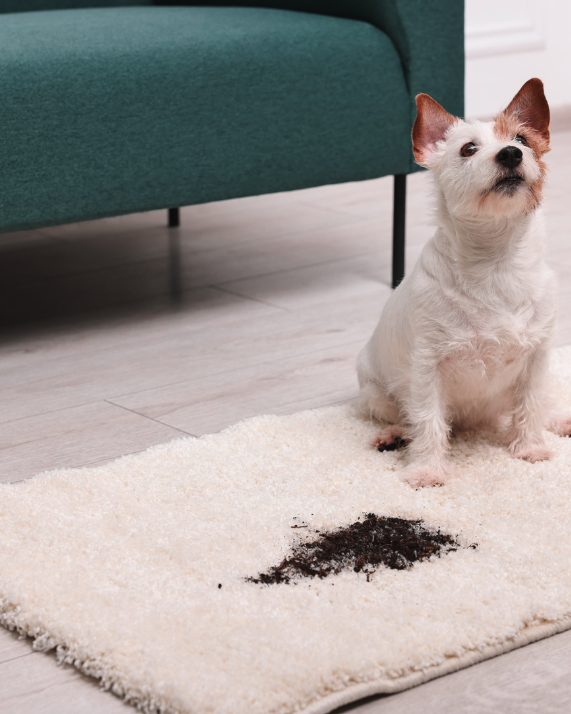
Expert Pet Stain & Odor Treatment
Full-depth enzyme treatment that neutralizes odor at the uric acid crystal level, not just surface odor masking. The most common reason rugs are brought to us and one of our most requested services.
Thorough Drying
We dry rugs completely under controlled conditions. Incomplete drying is the primary cause of mold growth and permanent odor in area rugs, we never return a rug that isn't fully dry throughout.
Rug Fiber Types — Why Each Requires a Different Approach
Fiber Type |
Cleaning Considerations |
DIY Cleaning Risk |
|
Wool |
Natural protein fiber. Heat and harsh detergents cause felting, shrinkage, and color change. Requires cool-temperature, wool-safe cleaning. Natural lanolin is protective but can be stripped by alkaline cleaners. |
High — hot water and strong detergents cause irreversible damage |
|
Silk |
Most delicate of all rug fibers. Water alone can cause dye bleeding, luster loss, and pile distortion. Requires highly specialist dry or cold-water treatment. Extremely limited DIY options. |
Very High — nearly any home cleaning attempt risks permanent damage |
|
Cotton |
Used in the foundations and piles of many rugs. Cotton absorbs water readily and can shrink, distort, or develop mildew if not properly dried. Cotton-foundation rugs must be dried flat under controlled tension. |
Moderate — shrinkage, mildew if not properly dried |
|
Nylon / Polyester |
Synthetic fibers, colorfast and durable. Respond well to water extraction and standard cleaning agents. Still benefits from professional extraction depth not achievable with home carpet cleaners. |
Low — most risk is from inadequate drying or residue |
|
Polypropylene (Olefin) |
Very stain-resistant but vulnerable to heat, high-temperature cleaning melts or distorts polypropylene fibers. Must be cleaned at cool temperatures. Attracts oil-based soiling that requires solvent pre-treatment. |
Moderate — heat damage is irreversible |
|
Jute & Natural Fiber |
Jute, sisal, and sea grass are sensitive to water; overwetting causes fiber decomposition, color change, and a permanent musty odor. These rugs require specialized dry or near-dry cleaning methods. |
High — water damage is common and can be permanent |
|
Viscose / Bamboo Silk |
Often used as a wool substitute, highly water-sensitive despite its appearance. Crushes easily when wet and is prone to browning (water stain) as it dries. Requires careful specialist treatment. |
High — browning and pile crush from water contact |
Area Rug Cleaning Serving All of Suffolk County
Oak Neck Cleaners is located at 945 Montauk Highway in West Islip, NY 11795. Drop off your area rug in person during our business hours (Monday–Friday 7:30 AM–6 PM, Saturday 8 AM–3 PM), or schedule a free pickup. We serve customers throughout Suffolk County, including:
West Islip |
Bay Shore |
Babylon |
East Islip |
Brightwaters |
Large rugs are especially convenient to have picked up, no need to roll, wrestle, and transport a large rug in your own vehicle. Call 631-422-4339 or schedule a pickup online.
Stain Removal & Pet Odor Treatment for Area Rugs
Rugs suffer from a wide variety of stain and odor issues, and many are made significantly worse by incorrect home treatment. Here's how we approach the most common problems:
Issue |
Our Approach |
Timing / Urgency |
|
Pet Urine (Odor & Stain) |
Pet urine penetrates through the pile into the rug foundation and backing; surface cleaning alone doesn't address the odor. We treat the full depth of the rug with enzyme-based neutralizers that break down uric acid crystals, eliminating the odor source rather than masking it. |
Bring in promptly, dried urine crystals are harder to fully neutralize |
|
Pet Feces & Vomit |
Biological waste on rugs requires immediate removal of solids before any cleaning; pressing solids into the rug makes extraction significantly harder. We treat remaining staining and odor using targeted enzyme and biological-neutralizer products. |
Act immediately; don't rub or press solids in |
|
Red Wine |
Wine stains on rugs respond better to prompt treatment. We use targeted spotting before full rug wash to pre-treat the tannin component. Success depends on fiber type and how long the stain has been present. |
Treat within 24 hours if possible |
|
Mud & Tracked-In Dirt |
Allow mud to dry completely before bringing the rug in; attempting to clean wet mud spreads it deeper into the pile. Dried mud is extracted at the fiber level during the full wash process. |
Let dry first; don't scrub wet mud |
|
Coffee & Tea |
Tannin-based staining is treated with targeted pre-spotting before full rug wash. Milk-based coffee adds a protein component treated separately. |
Treatable within several weeks, fresh |
|
Grease & Oil |
Solvent-based pre-treatment before the main clean. Oil and grease on natural fiber rugs (especially wool and silk) require especially careful solvent selection to avoid dye disturbance. |
Avoid home cleaning, wrong solvents set the stain |
|
Mold & Mildew |
Mold in rugs typically results from incomplete drying after a spill or flood. We treat mold and mildew with appropriate agents and ensure complete drying under controlled conditions after cleaning. Some severe mold staining may be permanent. |
Assess promptly, mold spreads and fibers deteriorate |
|
General Soiling & Dulling |
Rugs that have lost their color brightness and feel flat due to years of accumulated soiling, even without specific stains, are revived by a thorough professional extraction that removes embedded particulate from throughout the pile depth. |
Annual or biennial maintenance cleaning is recommended |
Antique & Heirloom Rug Cleaning — Specialist Care for Irreplaceable Pieces
Some area rugs are more than floor coverings; they're family heirlooms, significant investments, or irreplaceable artifacts. A 19th-century Persian Heriz, a tribal Caucasian runner passed down through a family, a hand-knotted Aubusson; these pieces require a level of care, individual assessment, and conservative approach that standard rug cleaning cannot provide.
Our Approach to Antique & Heirloom Rugs:
Every antique or heirloom rug is examined individually before any cleaning attempt. We assess pile condition and height, dye stability (critically important — many antique vegetable dyes are unstable under wet conditions), fiber integrity and fragility, foundation condition, and any existing damage such as fraying, splitting, or previous repairs. We discuss our findings with you before any cleaning begins, outline what approach we recommend and why, and give you an honest expectation of the outcome. Some antique rugs are best served by a very conservative surface cleaning rather than a full wet wash; we will always advise you on the safest path. We never attempt a treatment that carries a significant risk of damage without your informed agreement.
If you have an antique rug, a family heirloom, or a high-value hand-knotted piece that hasn't been cleaned in many years, call us at 631-422-4339 before bringing it in so we can discuss the best approach first.
Customer Reviews
Carpet & Area Rug Cleaning FAQ
For most area rugs in regular household use, professional cleaning every 12 to 18 months is a reasonable baseline. Rugs in high-traffic areas (entryways, living rooms, hallways) or in homes with pets or children may benefit from annual cleaning. Rugs in lower-traffic areas (dining rooms, bedrooms, occasional-use spaces) can often go 18–24 months between professional cleans. Antique and high-value rugs should be assessed individually; the appropriate frequency depends on pile condition and fiber stability.
Yes, pet stain and odor treatment is one of our most common and most requested area rug services. Pet urine in particular penetrates through the pile and into the rug foundation, where surface-level cleaning cannot reach. We use enzyme-based neutralizers that work at the uric acid crystal level to eliminate odor at its source, not mask it on the surface. Success depends on the fiber type, the extent of penetration, and how long the stain has been present. The sooner it's treated, the better the outcome.
Yes. We have experience cleaning Persian, Oriental, Turkish, Indian, Pakistani, and other hand-knotted and hand-tufted rugs of all origins. Antique and heirloom rugs are assessed individually before any cleaning begins. We test dye stability, examine fiber condition and pile integrity, and discuss our recommended approach with you before proceeding. For high-value and antique pieces, we give you an honest expectation of the outcome before any work starts.
Our area rug cleaning is a drop-off and pickup service; rugs are cleaned at our facility at 945 Montauk Highway in West Islip. You can drop your rug off in person (Mon–Fri 7:30 AM–6 PM, Sat 8 AM–3 PM) or schedule a free pickup from your home throughout West Islip, Bay Shore, Babylon, and surrounding Suffolk County communities. If you're not sure whether your rug qualifies or you have questions about transportation for a large rug, call us at 631-422-4339.
Turnaround time for area rug cleaning at Oak Neck Cleaners varies based on the rug type, size, level of cleaning required, and current volume. The standard turnaround time is typically within one week. Antique rugs or rugs requiring significant stain treatment may take longer. If you have a specific timeline requirement, call us at 631-422-4339, and we'll do our best to accommodate.
Yes, wool and silk are among our most common specialist cleaning requests. Wool rugs require cool-temperature washing with wool-safe agents to prevent felting, shrinkage, and lanolin loss. Silk rugs are among the most delicate of all fiber types; water and many cleaning agents can cause dye bleeding and luster loss, and require highly conservative specialist treatment. Both fiber types are assessed individually with dye stability testing before any wet cleaning is applied.
Yes. Our free pickup and delivery service is available throughout West Islip, Bay Shore, Babylon, East Islip, Lindenhurst, and surrounding Suffolk County communities. Rolling up and transporting a large area rug is one of the most inconvenient aspects of rug cleaning; our pickup service eliminates this. Schedule online or call 631-422-4339.